
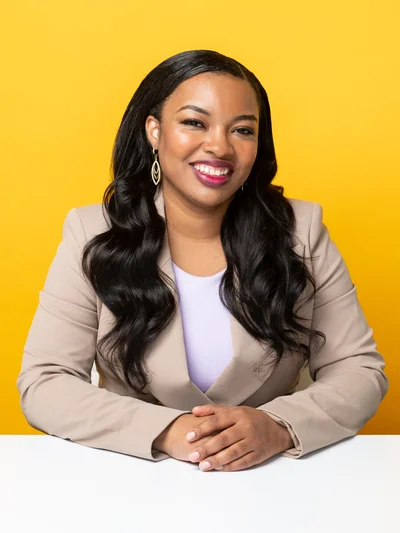
Ayesha Rascoe, host of NPR's Weekend Edition Sunday and Weekend Up First, joins us to discuss what it's like being a political reporter in a polarized country and what the "public" in public media looks like amid the loss federal funding.
Rascoe joined NPR in 2018 and served as White House correspondent during the first Trump administration and the Biden administration. We talk about covering the White House and how her work covering energy policy prepared her for covering day-to-day politics.
She is also the editor of HBCU Made: A Celebration of the Black College Experience, a book of essays about the impact of historically Black colleges and universities. Rascoe is an alumnae of Howard University, where she was editor of the school newspaper.
You might notice that this episode is shorter than usual. That's because a dead car battery on a very cold winter morning in Pennsylvania delayed us getting to the recording studio. We apologize and will be back to normal on the next episode.
Rascoe visited Penn State as part of the Dilemmas of Democracy series organized by the Schreyer Honors College.
This article is sourced from the Democracy Works podcast. Listen or subscribe below.
Where to subscribe: Apple Podcast | Spotify | RSS
Scroll below for transcripts of this episode.
Jenna Spinelle
Hello and welcome to Democracy Works. I'm Jenna Spinelle. This week, I have a conversation for you with Ayesha Roscoe, who is the host of NPR is Weekend Edition, and weekend up first, and also a contributor to the NPR politics podcast and many other shows that NPR does. Once you hear her voice, I'm sure you'll you'll recognize her from hearing her on the radio or maybe other podcasts that you listen to. We talked about the state of public media in the US right now, whether you can even call it public media, given the lack of federal funding. She has some thoughts on that.
Jenna Spinelle
We also talked about her approach to covering politics and staying objective in these polarized times, and how she talks with her kids about the state of the news and what's going on in the world. You might notice this interview is a little bit shorter than normal. Aisha visited Penn State on one of the coldest days we've had this winter here in central Pennsylvania, and I picked her up at the hotel and came back out to my car to go to the studio, and my battery died, so we were a little bit late getting to the studio, but we still packed a lot into this shorter conversation. And I hope you enjoy the insights from Ayesha Roscoe.
Jenna Spinelle
Ayesha Roscoe, welcome to Democracy Works. Thanks for joining us today.
Ayesha Rascoe
Thanks for having me.
Jenna Spinelle
So listeners are so excited to hear from you after hearing you on Weekend Edition, weekend up first, the pop culture happy hour, the politics podcast, basically all the things that you do with NPR. But before we get to all that, I'd love to know just a little bit about when you decided you wanted to become a journalist.
Ayesha Rascoe
You know, I decided I wanted to be to become a journalist. Way back when I was, like, in middle school, I took an aptitude test and it said, like, a good thing that I would be good at is journalism. And then the light bulb kind of went off, and I was like, Yeah, okay. And I've, like, weirdly pursued that ever since, like, I'm one of those weird kids who decided to do something, and I've been doing it ever since.
Jenna Spinelle
You and I were talking a little bit earlier that, you know, we graduated from school around the same time, worked on our college papers, and, you know, a lot of the folks on the staff, at least for me, I'm not sure about you, are no longer in journalism. They've gone on to marketing or PR. Some have gone back to like, I know somebody who's now a nurse and finds that less stressful. But what's, what's kept you with it, especially at the high level, the kind of pressure cooker that you work in.
Ayesha Rascoe
I mean, I've really been blessed like, I mean, journalism is a tough industry, right? It's gone through a lot of changes and and there's been a lot of contraction and so it's been a tough industry just to be able to, you know, feed your family, feed yourself. I've been blessed that I've been in a position where I've been able to make it work right, like, and, you know, kind of deal with, like, the ups and the downs. You know, honestly, there was a time earlier in my career where I did think about leaving journalism, but, you know, nobody would hire me. I'm sad. I need, like, a tissue. I'm so sorry. I really, I've really been blessed because I've been able to kind of weather the different storms and things of that nature. There was a time earlier in my career where I did think about leaving journalism, I was kind of overwhelmed, and I thought, you know, maybe I should go into PR do something different. Nobody would hire me, so I just kept my day job. And thank God I did, because, you know, it worked out. But, I mean, I understand it, and I always tell people, you know, you have to do what's what's best for you. I love journalism. I love the work that we do, and I believe in it, but you know, sometimes you have to, kind of like serve it. You have to find your mission or your goal in another way.
Jenna Spinelle
And I mean, especially because 2025 was a catastrophic year for NPR and public media in general. And of course, just the other week, as we're recording here, the Corporation for Public Broadcasting has dismantled. So I guess, given all of that, like, can you share anything about what the vibe is like in the newsroom right now, how folks are feeling given all the cuts and the sort of devastating past 12 months or so that it's been.
Ayesha Rascoe
I mean, we're in unchartered territory right now. It is a place that we've never been. We've never been without federal funding, I will say at NPR, at kind of at headquarters. I think our big concern is the member stations, who are really on the front lines of being impacted by this, and then we're downstream, and we'll be impacted. Buy it. But, I mean, I think it's like trying to figure out how we can still serve the public, right like That's our mission. Our mission isn't to make money or whatever. Our mission is to inform the public. And how do you do that if member stations are struggling right now, I think we, we've been blessed to have so many people give and and to donate and to really try to shore up public media. Is that sustainable? Is a really big question. And like, how do you how do you move forward, and what does that look like? But I so I think that there's a lot of concern about the future, but there's also, you know, I think there is a hope. I think everyone is still very hopeful about the work that we do, and that we'll be able to find ways to innovate and to maintain the work that we do.
Jenna Spinelle
Yeah, so that this question might be better, sir, for the scholars that we have on the show who study media, but I'm curious if you still think of it as public media, or if it's appropriate to think of it as truly public media without the government funding.
Ayesha Rascoe
That's a that's a good question. I mean, I think we still think of it as public media, because the mission hasn't changed. But obviously, when you don't have the federal funding, it it, you know, you the federal funding was to make it so that it was for everyone and that we weren't beholden to any one donor or whatever. We always had donors. We always had, you know, but we, I think we still consider ourselves public media, because the mission is the same. And I think it's trying to figure out how do you operate. Sorry, but I think it's like trying to figure out, how do you operate in this space now? And there are people who did not want the government involved in funding media, and who made the argument, and at this point, they've they've successfully made the argument that government should not be involved. And so then I think, as a as a network, we have to think about, what does that mean for us, and then what does that mean for who we are, and how do we still serve and inform, and, you know, carry out our mission if we don't have the government funding.
Jenna Spinelle
And so you covered the first Trump administration for NPR. I mean, you could say a lot about about Donald Trump, but he fundamentally hasn't changed 2016
Ayesha Rascoe
I think he, I think he has gotten more unbridled. Yeah, I think, I think in some ways, he has changed like not just more to he's become more of what he was in the first administration where he was, you know, reigned in by people, but now all of those rains and shackles are off, and so now he is fully, he is fully Donald Trump.
Jenna Spinelle
Yeah, so where I was going with that is, like, Did you see the funding cuts coming, given that, you covered him?
Ayesha Rascoe
He wasn't really interested in NPR, that was in the first administration. So he didn't, I we kind of thought maybe he didn't know who we were, like he wasn't interested. He never gave us an interview, but he didn't really talk bad about us, not not in the first administration, we weren't really a focus of his. So I really think I would guess that it was probably some people around him who started talking to him about it and said, look at these people. And got him worked up about it, because he's really kind of a very, very old school media head. His focus was always the TV networks, and then, like, the, you know, the New York Times, The Washington Post, any of the New York media, he really wasn't focused on public media. So that was a new focus for the second administration
Jenna Spinelle
Well, and I mean, some of the scholars we've had on here have told the story of how it's really been a, at least a 30 year campaign by some members of others to sort of delegitimize public media and paint it as too liberal and all those things.
Ayesha Rascoe
Yes, I mean, and I think there were people who had certainly, for years, been saying, there's a problem with, you know, public media, and there had been all these fights over funding. Before that, public media was able to kind of stave off, but this was a moment, especially because, you know, President Trump is very, you know, I mean, he's antagonistic to media in general, like this was the time to strike, and that's what they did.
Jenna Spinelle
And it's just so interesting, because this sort of parallels, in some ways, what's happened with higher ed, where there's a sense that, like from the outside, everyone thinks it's too liberal, but from the inside, this has certainly happened in higher ed, I think, in public media too, the staff thinking it's not liberal enough, or not giving credence to social justice or trans issues or those, those kinds of things.
Ayesha Rascoe
Well, I mean, I think in all of these organizations and every news outlet that I've been at, certainly in public media, you have people all across the spectrum like this idea that everyone's just in lockstep together. You know, you have very opinionated people who have very strong feelings, all sorts of feelings about how the news should be presented, what the center is, what what is unbiased, what is, what should we be focusing on? And so there is a very large contingent of people who, yes, who would say, NPR has been, you know, you know, you're, you've been too kind to the administration, you've been too accommodating. Then there are people who say, Oh, you're just totally anti Trump and this and that. So it really is, I think I have always felt this idea that there, you know, that every news outlet is just a bunch of liberals, you know, walk, you know, locking arms and saying, let's go to the left is not that's never been my experience at all. I mean, people have very strong opinions across the board about what news should be, and that's the way it really should be, right, like people should wrestle with how to present the news, like, that's what it should be like. Having those debates is important. Yeah.
Jenna Spinelle
So what does that look like for you personally? What are some of those things that that you're balancing when you're deciding whether to cover a story, how to cover a story, those kinds of things.
Ayesha Rascoe
I mean, I think the main things that I balance is like, I try to look at, like, okay, what are the facts of this situation? Not what as I would want them to be, but as they are, right? Like, not so a lot of times, you know, if I'm, you know, doing a story, or I'm talking to someone, it's not about like, I may have an idea of what I think the truth is, or what I think, and then I learned something new. Oh, I didn't know that. I didn't know this was the way this was. I try to think about what is actually impacting people, right? Like so, because we're on the weekend, I can kind of step back a bit. We do more like looking at the history of stuff, or looking trying to provide context when the world is spinning so fast, but I always try to look at like, well, how does this actually impact people? What do people actually really need to know about what their lawmakers are doing, what is happening in their world? And so that's what I try to do. And I also try to think about, what am I missing? Like, maybe this isn't my experience, but this is, this is the experience of another group. And like, this is something that you know. I am always interested in, things that I am unaware of, and I want to learn more about.
Jenna Spinelle
So there, there have been studies done with new people who are distrustful of the government. If you go and be a poll worker, or you even just observe a poll worker, that radically increases your trust in elections and the process, because you see how it happens. And it's been floated. I've heard folks say, Well, what if we did the same thing for newsrooms, invited members of the public, especially those who might be skeptical of trusting journalists and journalism and the information that comes out, like invite them to an editorial meeting or to shadow reporter on a story. Like, I guess one would you? Would you welcome that? Or I could also see how it'd be annoying, in your space when you're doing your job, but and also like, do you think that something like that might might be helpful to sort of regain that trust?
Ayesha Rascoe
I mean, I think any way that you can try to humanize reporters, because I do think that people don't understand that we're humans, I think, probably not necessarily, like an editorial meeting, but I think, like, I think, like something where you are following this person out as they're getting the story probably would be the best thing, because you see that this is a person who is going out talking to a bunch of people and just trying To get us, like, working, right? I think people forget like this is also our jobs. Like this is, you know, the way that we feed our families. Like we we're out here working. We're not jukeboxes. We're not like, you know, we're not AI. We are real, living, breathing, human beings. And I think any way to get people. Connect to that more and to understand that, I think would be helpful.
Jenna Spinelle
Yeah, and we're increasingly seeing reporters doing this on social media as well. I know you typically post on Instagram on Sundays when you're in the studio, talk about how how you think about yourself that way, because I know it's also least one of the tenants I learned in journalism school was never put yourself in the story. So that always, like, makes me feel a little funny doing that. I wonder how you've sort of thinking about that.
Ayesha Rascoe
I mean, I don't try to put my so I don't try to put myself in the story. I do think that we are in a day and age where people want, though, to know more of who the person is. Like, I think the idea of, like, this kind of voice of God, news reporter, like, you know, newscaster doesn't work as well. Like, people want to know just a little bit about you. Like, they want to know the things that you like, the things you're interested in, what you find funny and so and especially as a host, I think part of what I try to do is to show a little bit of my humanity as it relates to the story, but then, but use that as a springboard for whoever I'm talking to. So it's not about me, it's really about them and making it a conversation. And so when I do like Instagram and Tiktok and stuff like that. It is me trying to, like, pull back the curtain a little bit and say, This is how this works. This is what I learned this week. This is how you know, kind of, this is the behind the scenes, like, I think it's trying to let people know, you know, this is how the sausage is made, as they say, so that people have, because I think that in this day and age of social media and stuff, they want to know you as a person, and not just as, like this oracle that provides information, yeah?
Jenna Spinelle
And what kind of feedback do you get when you do that?
Ayesha Rascoe
People are always excited, like, people are excited to see me. They're they're like, oh, you know, I hear you all the time. Now it's great to actually see your face and see who you are. And so people are generally excited. And people, you know, they learn things about me, like, I don't like birds, and then they'll bring it up, and, you know, when I do a bird segment, and, like, all these things. So it's like they remember those things, and they feel more connected to you. Yeah, so
Jenna Spinelle
You mentioned your kids before you are co parenting, five children, if I understand correctly, yes. How do you talk with them about the news and politics and what's going on?
Ayesha Rascoe
Well, I always tell them to, you know, make sure they're using sources that are reliable. And I tell them, you know, don't believe everything you listen, you know, you hear on YouTube, it's not that's not a reliable source. So I'm constantly like, telling them, like, Listen, you need to, you know, question those things that you're, you know, just finding on Tiktok or YouTube or whatever, those aren't necessarily facts like you need to look at, you know, reputable news sources, the New York Times, The Washington Post, other books are really great. Like, go to a book like those are, you know, those are usually way more fact check, right? Like and like. So I'm always like, telling them to, like, listen like, try to make sure you're you're getting information from places and people that you can trust, and also looking up the evidence behind what people are telling you. Like, just don't take it as fact. So I'm constantly kind of telling them this, and they kind of don't listen. And I'm always like, did you get that from YouTube? Like, that doesn't mean it's true. I'm always, you know, trying to get them to, like, think further, yeah.
Jenna Spinelle
So as we come to a close here, you know, I know it's you have a lot that you do, it's probably easy to get wrapped up in, like, the day to day of covering stories and recording podcast episodes and those kinds of things. But do you ever take a step back and think about, like, the larger role that you play in our democracy? And I mean, maybe not even just you in particular, but you know, NPR or the you know, where you all kind of fit in this bigger picture we call America? Yeah.
Ayesha Rascoe
I mean, I think that the work that we do is important. I think that what we try to do is to try to bear witness, right? Like, that's what we really you know, I'm not trying to convince anyone of anything. I'm not trying to tell you you have to do this or do that. I want to give you information so that you can decide for yourself whatever that is. But I just want you to have the best information to make those decisions. And then I feel like, as far as, like, you know, just kind of setting a marker, like, this is what happened and so and. And that can seem insignificant at times, but I think it is important that you document like what is actually happening, the truth. And I think that it it matters and so and it matters especially for a democracy, and for a democracy to actually be able to function is for people to know what's going on and for that to inform their decisions when they are, you know, voting and, you know, electing public officials. So that's what I look at it. I look at I look at it as US bearing witness, and I feel like that's what we provide for democracy.
Jenna Spinelle
That's great. Well, that's a fantastic place to live, and I hope listeners will tune in to you if they're not already. Aisha, thank you so much for your time today.
Ayesha Rascoe
Thank you.
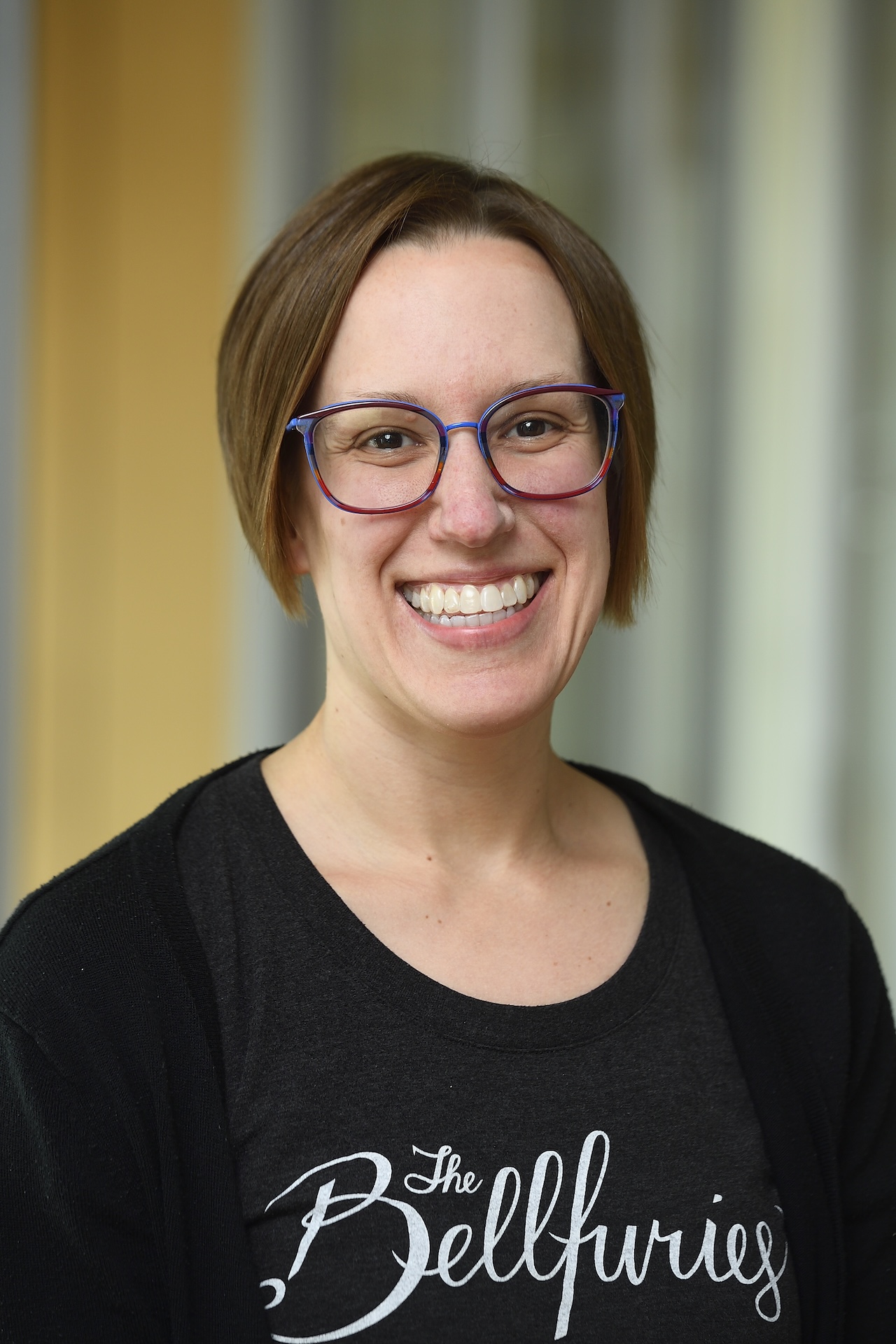
Jenna Spinelle is a writer and podcaster who tells stories that inspire hope and change in trying times. She hosts the podcasts Democracy Works When the People Decide, both productions of the McCourtney Institute for Democracy at Penn State. She is currently writing a book about the democracy reform movement and how more people can get involved in the work to strengthen American democracy. Spinelle teaches courses on news writing, podcasting, and content creators at Penn State’s Donald P. Bellisario College of Communications. Her writing has appeared in outlets including Time magazine, Inside Higher Ed and Current, a trade publication covering public media.


We are part of The Democracy Group, a network of podcasts that examines what’s broken in our democracy and how we can work together to fix it.