
Changing the world is difficult. One reason is that the most important problems, like climate change and democracy reform are structural. They are larger than any one person can solve on their own, yet we're bombarded with information about individual actions like attending a public meeting or lowering your carbon footprint. Do these individual actions even matter? Should we focus instead of fixing broken systems?
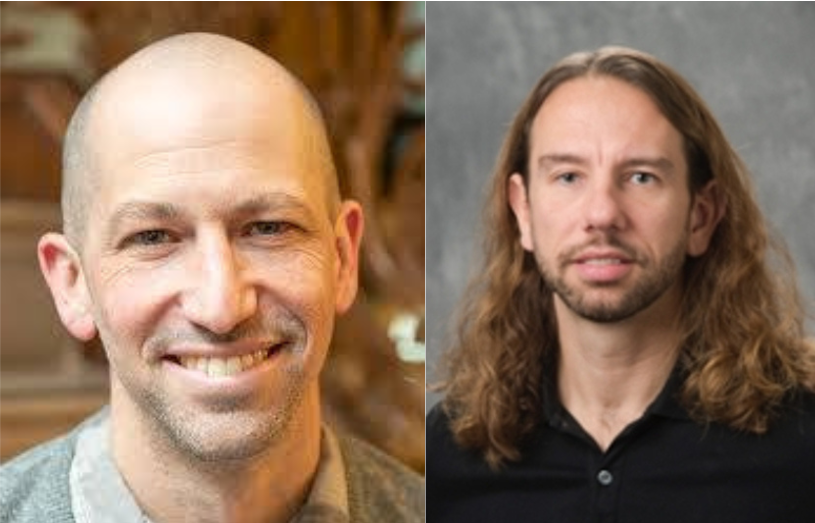
For our final episode of the season, we explore how individual actions and structural reform can work together to create lasting social change on a range of issues, including democracy. Our guests offer a way out of the either-or thinking and a framework for creating lasting social change. In Somebody Should Do Something: How Anyone Can Help Create Social Change, Michael Brownstein, Alex Madva, and Daniel Kelly show us how we can connect our personal choices to structural change and why individual choices matter, though not in the way people usually think.
Brownstein and Kelly join us on the show to discuss examples of how individual actions leveled up to create larger-scale change, including Mothers Against Drunk Driving and the milk pasteurization movement in the early 20th century. We also discuss how the lessons from these movements can be applied to democracy reform campaigns like campaign finance reform and ranked-choice voting.
Brownstein is Professor and Chair of Philosophy at John Jay College and Professor of Philosophy at The Graduate Center, CUNY. Kelly is Professor of Philosophy at Purdue University, where he is also the Director of the Cognition, Agency, and Intelligence Center.
This is our final episode before our summer break. Thank you to Brandon Stover for editing the show this year, to WPSU for production and promotional support, and to Michael Berkman, Chris Beem, Cyanne Loyle, and Candis Watts Smith for sharing their insights on the show. We'll see you in September!
This article is sourced from the Democracy Works podcast. Listen or subscribe below.
Where to subscribe: Apple Podcast | Spotify | RSS
Scroll below for transcripts of this episode.
Jenna Spinelle
Hello and welcome to Democracy Works. I'm Jenna Spinelle. This is our last episode of the spring season before we take a couple of months off for the summer. But I am thrilled that we can bring you this conversation before we take that break. I recently caught up with Dan Kelly and Michael Brownstein, who are two of the three authors of an excellent book called Somebody Should Do Something: How anyone can Help Create Social Change. The third author is Alex Madva. And this book really encapsulates one of the core problems we've been talking about on this show for the past, I don't know, eight years or so now, which is, is the way to create lasting change by individual actions or by larger scale, systemic change? And Michael and Dan and Alex argue that that's really a false paradox or a false dichotomy. They in this book, offer several examples of ways that the individual and that the structural can work together to create change that sticks around, not just something that you know is there in one election cycle and gone the next or another, shorter term kind of change. So this book really gave me a lot to think about, as I am currently working on one of my own all about the democracy reform movement, and some of these questions definitely come up.
Jenna Spinelle
Alex and Michael and Dan don't specifically talk about democracy in the book. They focus on climate change and racial justice, but we do talk about democracy in the interview, and how folks working in democracy reform can apply some of their findings to their work. So again, Democracy Works will be taking our annual summer hiatus. We will be back with new episodes in September. Thank you, as always, to my co hosts, Cyanne Loyle Candis Watts Smith, Chris Beem and Michael Berkman. Thank you as well, to our colleagues at WPSU for their support on the show. And most of all, thank you to Brandon Stover, who edits the show and puts it on YouTube. So without further ado, here is my conversation with Michael Brownstein and Dan Kelly.
Jenna Spinelle
Michael Brownstein and Dan Kelly, welcome to democracy works. Thank you both for joining us today.
Dan Kelly
Thanks for having us.
Michael Brownstein
Great to be here.
Jenna Spinelle
Yeah. So I think by having the two of you on we have now doubled the number of philosophers we've had on this show over the course of the years that we've been doing it. We tend to draw more from the realm of social science, but I'm excited to have this conversation with the two of you to talk about your perspective on social change and how you articulate that in your book, somebody should do something. And I'd like to just start by asking each of you to talk a bit about how you became interested in studying social change, and maybe the perspective that you bring to it as a philosopher, and the extent to which that might be different from how a political scientist or someone else from social science might approach the topic. So we'll start with you. Michael.
Michael Brownstein
Well, thanks for having us again. It's fun to talk across disciplines and with people who are interested in sort of the end goal. I had a professor when I was at Penn State, actually, who said that there are usually one of three ways people get into philosophy, either failed science, failed religion or failed activist. And if I have to slot into one of those, it was definitely failed activist. And my failure wasn't necessarily that I like didn't bring about the revolution, although I guess I didn't, but more that I kept finding when I was engaged in causes in high school and college myself asking questions about well, like, why do people believe the things they do in the first place, and what causes them to change their minds, and what motivates people to do one thing or another? And those all seemed like philosophical questions. And so for a long time, I worked at the boundary between philosophy and psychology around issues of race and prejudice and de biasing and so on. And then I after tenure, pivoted to some other projects and got interested in looking at broader questions about social change, particularly with respect with respect to climate change, but but also with respect to any issue. So how do we put together insights from not just psychology and not just philosophy, from political science and sociology and economics and so on into like a co. Inherent picture of what people can do or how they can think about their own role in bringing about change.
Jenna Spinelle
And Dan, what about you?
Dan Kelly
Yeah. I mean, Michael set up that the three options of what kind of fail you are or failure you are that leads you to philosophy. I don't know that I fit into any of them that well. I was a double major in English when I was an undergrad, and I think that it probably expresses this sort of general concern with the human condition. Maybe it's the human soul, if I'm a secular religionist or something, but I ended up sort of chasing that set of questions into the philosophy of mind, informed a lot by kind of evolutionary theory of different sorts, trying to figure out what kind of creature we are and why we're weird, and all the ways that we're weird and and the a lot of the trajectory of my career there has been trying to understand what's going on inside the head, and then just sort of a growing appreciation of how what's going on outside the head is actually just as important to understanding all these internal dynamics and how we connect with society. What we're trying to do is tell stories and sort of, you know, get our message across in ways which are accessible to people beyond the academy, but which are taking ideas John from, you know, economics and social psychology and a little bit of evolutionary theory, and sort of weave those into the picture we're trying to construct of here's a way to think about social change, particularly from a perspective which is like, if I'm an individual and I want to contribute to it somehow, especially appreciating the scope of a lot of these issues that we're that we're we're trying to address. How can, how can we sort of make these, these ideas both actionable, but also just sort of expand our moral imagination and how to think about social change and what we can do about it.
Jenna Spinelle
So where does that that false choice that we all seem to have in our minds come from that either it's we have to do something on our own, or we have to go all the way to the other end of the spectrum and try to enact these big, sweeping, large scale changes.
Michael Brownstein
I mean, one way to answer that question would be, you would not be surprised to hear us say that it has sort of twin origins in some features of individual psychology that are perennial, and some features of Western culture in the 20th and 21st Century in particular, that provide a real fertile soil for that dichotomy to blossom. So one of the stories that we tell that we sort of open the book with, is about a real century's worth of propaganda that tried to put complex social problems on the shoulders of individuals. And that goes back to car companies trying to manage growing outrage over pedestrian accidents by saying, you know it's on you Mr. Jay Walker, a term that they invented for being irresponsible on the way that you walk across the street to cigarette and gun companies to fossil fuel companies and so on. And so there's this real playbook that is, it's evident how powerful it is when you really see how pervasive it is. That playbook would never have worked if it didn't find a really willing and receptive audience in individualistic Americans who inherit this weird in the acronym sense, the Joe Henrik acronym sense, psychology of being particularly isolated from one another, particularly self focused, and so on, and so, you know, I don't think you can pin the origins of that duality on, like a disposition all people have, although there is some of that, or to it being a kind of fluke of history, although It also is some of that. Really, it's the interaction of the two, which is, like you said, kind of the theme of the book,
Jenna Spinelle
And then this, this really also, just to tease out some of what you were starting to say there about the media. This is where, like, the Ad Council comes in, right? I mean, you list smokey, the bear, only you can prevent forest fires, the crying Indian McGruff, the Crime Dog. These are all examples of how industries there's sort of like, it seems like a domino effect, kind of sees them. Oh, it's working over here. We can do this too. We can do this too. And it becomes, I'm sure there are more contemporary examples of it as well. But maybe to bring in another uniquely American facet, which is neoliberalism and capitalism, there's an economic incentive to doing some of these things as well.
Dan Kelly
I mean, if you're looking for a contemporary example, one of the other ones that we talk about is the very idea of a personal carbon footprint, like as consciousness was sort of growing about the climate crisis. I don't think BP came up with the idea, but they certainly saw the potential of it to do this kind of use this playbook of what we think of as the dark arts of corporate PR. You know, if you're worried about the climate change, don't start lobbying your congress person to, like, regulate big, big fossil fuel just, you know, take a couple less flights, or, like, get a car which gets better gas mileage and have the same responsibilization as a technical term for this, this process playbook, just to add to what Michael was saying, another, another one of these features, which may be a little bit more universal than just sort of parochial a Western but a way that we, you know, maybe one reason that we so easily fall into the it's either the structures or the individuals, is just the way that our brains manage. Very like how they they sort of simplify very complex topics that they need to think about. And you see an instance of this, which we use as kind of analogy in the book, with just something like perception. And if you see, we use the example of that classic Duck Rabbit.
Dan Kelly
I don't know if it's a visual illusion, but you know, you look at that and you can't see it as both at the same time, like you see it under the aspect of a duck. And what if you see it under that, then certain features of it kind of come to the foreground, and others, like become less salient and fall into the background. And then if you see it as a rabbit, then that like the figure and ground switch. And I think part of the case that we make in the book is that something like that probably happens when you're thinking about big social systems and the dynamics of how they operate. And change that, like when you're looking at them, you can, you know, your mind just very naturally simplifies into, well, we're thinking about the structural factors, and I'm seeing it as kind of a whole, or you think about it in terms of the individuals, and it's just very hard to keep both of those cognitively in view at the same time and the same way. That's very hard to like see it that thing as a duck or a rabbit. And we also make the point that it's like arguing about whether or not it's really a duck or really a rabbit is just it kind of misses the point, right? Like, the image is static. It's a Duck Rabbit, and that we can, like, we can see it under different aspects similarly. Is it really structural factors, or is it really individual factors both? But, like, sometimes it's hard to keep both of those sort of together in our mind at the same time.
Jenna Spinelle
Yeah, and I want to come back to the Duck Rabbit for sure, if you guys really talk about it in terms of the the solutions or the different ways of thinking that you offer in the book. But there's also a sense, and you have this, this great little excerpt from a hypothetical article, I think you know an expert saying, individuals can't fix this problem. We have to change the system. And then journalists silent plea, but we have to give the reader something to do. So the expert, kind of begrudgingly says, Here are some small steps you can take to feel like you're doing your part. Like I have had that exact conversation on this show, I can't even tell you how many times about what people can do to fix democracy. So I felt very seen by that, that particular exchange. But I mean, it does speak to something like, there's, is the fear that if people lose a sense of individual agency, that everyone's going to stop doing things, and then the whole thing is just going to collapse even more than it already has. So that's why people kind of reach for that. Well, there has to be something, right? In addition to, you know, whatever the larger structural changes are,
Michael Brownstein
Yeah, I mean that. I think people not feeling like they have agency to do anything about problems that terrify them in the world is a is a bad result, right? Something has gone wrong when we're thinking about our when we talk about social change. If the upshot is, once you appreciate how complex and global a problem like fill in the blank is, whether it's climate change or structural racism or income inequality, then you'll realize there's nothing you as an individual can do about it like that cannot be the end of the story, if what we want is actually to try to inch our way toward a more just and equitable world. Similarly, the reason we wrote that little hypothetical exchange the way we did is because often where people end up if they think they don't have agency, is a kind of fallback of thinking, well, let's at least give people something they can feel better about, right? They can feel like they're making a difference, even if we have this kind of tacit agreement that it's not actually going to make a difference. And and that's also bad. And so what we wanted to try to do was kind of get out of some of these thought traps that that we think stymie more creative thinking, more like you said, kind of moral imagination about what our roles can be as individuals. And none of that is meant to. Be pollyannish that you know, here's the secret, five things that anybody can do to go and fix climate change. But rather, it's like rethinking what we mean when we talk about making a difference. And so like one of the big switches that we come back to again and again is switching from just focusing on what material impact you can have on the problem. So if you're talking about climate change, that's like, literally, how many pounds of greenhouse gasses am I going to save if I bike to work today rather than drive a car and think instead in terms of social influence, right? Like, how many other people can I get thinking about climate change or get thinking about their daily choices if I do X, Y and Z. And I think there's a lot of reasons to think that we all have opportunities to have a lot of social influence and and that really is a power, but it's one that we often fail to appreciate, and it's one that isn't usually a part of those kind of conversations that we distilled into that little thought experiment.
Jenna Spinelle
Yeah, well, and one example of that that you cite in the book is Mothers Against Drunk Driving, sort of an example. This. This both and right? They took individual actions, but that ended up resulting in quite a large policy change in the end. So tell us about, you know, how that that came together, and how that fits, maybe this kind of Duck Rabbit shift that you were talking about earlier.
Michael Brownstein
So most of your audience probably has heard about, heard of mad and in some sense, that's the point. So a study in I think 22,004 found that something like 94% of Americans had heard of the organization. It was. It was only started about 25 years before that, which is really remarkable, that in that short of an amount of time you know two or three people working together, created an organization that not only almost every American has heard of, but was instrumental in passing federal legislation around the drinking age, and maybe even more powerfully, really, was instrumental In shifting all kinds of norms around drunk driving. So the simplest answer is, you know, we were compelled by the example because of its enormous success, but there were two more reasons that really seemed to demand its inclusion in the book. One was, we wanted to find an example where part of the success of the social change entrepreneurship illustrated how important it is for people who want to change the laws or reform institutions or fix certain democratic structures tap into this sort of ethos of the day, the hearts and minds, where people's hearts and minds are, because we previously talked about historic failures to create and sustain systematic, structural change, where what, What social change entrepreneurs missed was the sales job, right? The persuasion over ordinary people, and didn't pay enough attention to individual psychology. And so what Janice Lightner, Who's the woman who started Mothers Against Drunk Driving, did was really tap into the individualistic ethos of the 1980s Reagan, Thatcher era, of personal responsibility and so on. And so our point wasn't like, Yay, that's always the way to go, right? But she was clever enough to realize that you can't try to just change the laws and structures in and of itself, without paying attention to the duck to the rabbit. Right the flip side of the coin, which is, what are people's biases and dispositions and habits of thought at the time that are going to allow them to accept or reject or be motivated by or disinterested in, in the structural reforms you're pushing. SO SO MAD really exemplified we thought this, this successful effort at tapping into the individualistic side of things while they were pursuing structural change. The second reason why it was a really competitive compelling example, which is related to the first, is that we didn't want to focus only on examples of efforts to create change that we necessarily like. And so while like, of course, I think all three of us are glad to see drunk. Driving rates go down and so on. I would also venture to say that none of the three of us were big fans of like the Reagan Thatcher era of personal responsibility, right?
Jenna Spinelle
Yeah.
Michael Brownstein
So we weren't like rah rah, Janice Lightner mad, and when we found out that the original name for the organization was Mothers Against Drunk drivers, not drunk driving, right? And that she was like, gung ho on this retributive we're gonna just put these people in jail and treat them like murderers, kind of effort, we felt a little queasy, right? Like, that's not my politics, but. But the point was that they were really successful at making change precisely by kind of capitalizing on on the ethos of the time, and if, even if, we would push for different ways of doing that, it seems like the lesson is crucial.
Jenna Spinelle
Yeah, that's so interesting. And I feel like so a lot of the people that I interact with, and people who listen to this show, who work in democracy reform, maybe kind of miss or aren't quite sure how to get at that ethos of the day, part of it. So if you're working on ranked choice voting or pushing for open primaries or campaign finance reform, now, all of those are have their own set of issues associated with them individually, but I think there is this larger picture of their big structural changes that are hard to make a case for, for a variety of reasons. So do you have any any advice you would give to our listeners out there, working whether it's on issues like that or other democracy reform kinds of issues, about how to apply this way of thinking that you outline in the book to the topic of democracy reform.
Dan Kelly
I mean, I could, I could point out two sort of pitfalls, which we talk about a little bit, that might be relevant to this kind of thing. So if you're looking to, like Michael said, tap into a reservoir of what, what a general population cares about and might be willing to support. I think that does matter in a lot of ways, obviously, but if you go about it without first convincing your audience then like you're just leaving yourself open for backlash. So one of, one of the stories we tell at the end of the book is, it's kind of like a huge success, but then, and so the we just briefly, we don't go into it as much detail, but the story of the teetotaling movement.
Jenna Spinelle
Oh, temperance
Dan Kelly
The temperance movement. Yeah, sorry I forgot to but, you know, here's, here's a here's an activist group who who united around an issue that they cared about, and and we're so successful, they reach heights of heights of success that it's hard to imagine someone amending the constitution today in a way which is so restrictive and but you know that in a lot of ways, like, they won their battle as well as you could possibly hope, and then 13 years later it got repealed. And so, like, if you don't do the work of actually, like, convincing, convincing the population, then you can have all the success in the world. And there's that there's no reason to think it's going to entrench and stay like it could turn around like like it did in that case. But another point or me, not necessarily a pitfall, but maybe something that's useful. Is it you don't always have to convince your audience of something they don't already believe in or wouldn't be willing to support. There's this idea of pluralistic ignorance, which is just that a lot of times people don't know that other people care about the same things that they care about, but that you know you sort of need to have that common knowledge in order to coordinate around it. And so just taking steps to figure out what people think and letting them know that they actually share a common value with a lot of other people that seems that seems like a really crucial step for all of this stuff. I remember seeing a and like we're still subject to. I remember seeing a poll like last year, around this time, it was something like 90% of the people in the world, including Americans, like care about the climate crisis and would like to see action taken on it that was so much higher than even I thought it would like, like that was like, strikingly high. And that's a really valuable piece of information. You know, you'd think that that seems to be a fairly shuttle ground for a political career to be launched, or something like that.
Jenna Spinelle
So there's also this idea of feedback loops that are important here. It seems like you talk about the story of the marriage equality movement and even pasteurized milk, which might be a little bit of a less familiar example to our listeners. So how does that fit into this story? The idea that, you know, things happen, there's feedback to it, and it sort of builds on. On on itself over time.
Michael Brownstein
So I think most, not about most, but many people have heard the story of the sort of genius scientist Louis Pasteur, you know, experimenting with wine and milk and so on, and coming up with basically the germ theory of disease and cooking stuff. And voila, right, we've got pasteurization, and all the babies are saved, and everyone can, you know, enjoy French wine and whatever. But it really took us by surprise when we learned that it was decades and decades and decades after the scientific discovery of pasteurization, before cities and states and countries were requiring it, and in the United States even, you know, I think it was not until 1940 something that the first state actually required pasteurization. And what happened, of course, was that there was a whole army of individual people, totally disconnected from one another, who were in various ways, responsible for the implementation of this idea. And they didn't necessarily see themselves that way, but that's sort of the way history shows them. So philanthropists who are interested in helping distribute free food to people after economic panics, and in New York City or distribution centers where nurses were giving out pasteurized milk and convincing people that it tasted, you know, that they would get used to the taste because they were used to drinking raw milk, people who were combating misinformation about the sour milk cure and why you should, you know, give your kid rotten milk. All these, all these people who were completely forgotten to history, who were doing the unsexy unseen work of taking a really good idea and getting it out there right, and making it stick and making it last. And so the like amazing role that pasteurization played in in lowering the rates of childhood mortality is really a story of, like, ordinary people finding ways to plug in. I mean, not taking anything away from Louis Pasteur or whatever, but like that is just a sliver of the story, and the rest of it is the part that that we often forget about. You know, look, when, when people ask that question about like, how can we get people to care about democracy reform and the filibuster and ranked choice voting or whatever the right fixes are? I mean, I think part of that answer is going to be fabulous communicator, political scientists writing op eds in the New York Times or whatever, about why one policy changes is better than another. But I think it's also like up to all of us as ordinary people to just talk about it, to find roles akin to what those philanthropists or those nurses or the various people who did little things to help implement pasteurization did in their circles, in their social lives, in their neighborhoods, or whatever. And one of the virtues of what that does is it helps combat the problem. Dan was just talking about about pluralistic ignorance. And there's a lot of literature on pluralistic ignorance and democracy. But another thing it does, I think, you know, just like, aside from measuring the effects, is it like gives us permission to talk about the things we care about, right? Like we live in this weird world where, I think there's often this prohibition on talking about politics, unless you feel like you know for sure that the person you're talking to agrees with everything you're going to say anyway. And I wish we were a little less cautious about that and a little more willing to be like, Hey, I heard of this idea of getting rid of the filibuster. What the hell's the filibuster? Oh, you know, turns out it's not in the Constitution, and they could just decide to get rid of it. You know that, like having those conversations is actually a form of activism, in my view.
Jenna Spinelle
And I want to stick with you for a second, Michael, because you mentioned writing op eds in the New York Times, which you and your co author, Alex madma, did we don't have time. I don't think to get into the the substance of what you wrote about, the idea of losing loudly. I'll link it in the show notes for people who want to read it. But what I want to ask you about is I read the comments of that op ed so you don't have to, but somebody put in there the Pollyanna is strong with these two and that's something I've had people say to me over the years too that, Oh, you're too Pollyanna, especially when it comes to democracy. This stuff is. Ever going to change? Yada yada yada. I think we could say the same about climate change or structural racism, the two things that that you write about in the book. But how, what do you say to the you know, people who want to say your your Pollyanna is too strong for our current moment,
Michael Brownstein
Well, what I would say about the specific example that we wrote about in the Op Ed, which is the redistricting fights, is, you know, I think we won that argument, right? Like, things would be really bad right now if, if the Democrats in Texas and beyond kind of said, we're going to take the high road and unilaterally disarm and we're just going to give, give the game over, right? So thank goodness they fought and and lost loudly, because I think we're in a position now like, as as you and many of your colleagues will probably attest, like, Thank goodness for thermostatic public opinion. And looks like we're in good shape, you know, for the midterms, assuming they're fair elections anyway. But I just think that that's of a piece with a broader sweep of evidence, some of which we talk about in the book, where, if you step back from this year or this political cycle, or even, you know, maybe what you think about has happened in American politics in the last in this century, say it's just overwhelmingly obvious that there are incredible success stories in human beings ability to improve their condition worldwide. So one of the charts we have is about the number of people, the percentage of people in the world living in a democracy 200 years ago versus today, or living in desperate poverty compared to today, or able to read or living past the age of five. And I mean, these are like the basic structural features of living a decent life. And so I think there's all the evidence in the world that progress and change are possible, and none of those things happened because one person found a magic solution, and none of those things were fated to happen. They happen because lots and lots of people work really, really hard in creative and inventive ways to make them happen. And in some cases, we got lucky, right? Like we're not in control of history, and we need Providence when we can get it. But none of those things would have happened if, if people hadn't just fought like hell for them. And so like I get the way in which trying to be a bit of a of a bearer of good news can make it very easy to seem as if one is pollyannish, especially right now. But I do think, like history is on our side, and I don't see what the alternative is, right. Like, you know, if, if faced with the choice between being a little Pollyannaish and giving up and going home, like, I'll take pollyannish any day,
Jenna Spinelle
Yeah, one, one last thing I wanted to get to here. So you also talk about incrementalism, which is something we've we've talked about off and on here on the show in the past as well. And it doesn't necessarily mean that you have to moderate your view or give up the ultimate goal that you're working for, it maybe just means moving more slowly, more deliberately to get to that change. I think that also ties into what you were saying about the all the kind of silent work that happens behind the scenes, like the UN the unsexy work. So maybe if you could just help, help our listeners who might have that perception about what it means to be incremental or to push for incremental change again at a time when it seems like drastic change is the only thing that's going to work or move things forward.
Dan Kelly
Yeah. I mean, I think one idea which could probably unite a lot of these, these topics that we've just been talking about is just this idea of epistemic humility, which is just a way of saying, like, no one really knows what's going to happen next. So the person who's calling Michael and Alex super Pollyannaish, I that's coming from a place of someone who assumes that they know exactly what's going to happen and what's going to happen is nothing's ever going to change. And like Michael said, you know that just is wrong, in fact, in this case, and if you look at history, like things just keep changing, and they keep changing in ways that we can't really predict well. So the idea of incrementalism, part of what we're talking about there is, it's basically the psychology of incrementalism, where. It's, it's easy to sort of set a standard, or sort of set the goalposts for what counts as a successful change, and then anything short of that is just like a failure, and we should all go home, because nothing ever happens. And that's, that's just, you know, that's not a healthy attitude, and it's not one which is conducive to the sorts of, like, long term agendas and goals that we're aiming at. It's also, you know, like getting 75% of the way there is better than not getting any of the way there at all. But it also might be the case that, like, the kind of motion from the point, you know, like social change, it doesn't, it doesn't always happen in these and these sort of very smooth, continuous trajectories, like maybe once you pass the 76% mark, then what you do is to bring us back to the question you asked earlier about feedback loops. Maybe then you pass a tipping point and you set off some feedback loop. So the change, just like builds on itself in a cascading, amplifying way that we just wouldn't have been able to foresee beforehand, because things are happening in other parts of the society that, like we don't know that they're going to combine in the way that they do, and so just having a kind of open ended view of the future and having some flexibility on what counts as success, but that, I mean, just for me personally, has that's really helped me maintain a kind of hope, just like, look, we don't know what's going to happen that, you know, redistricting, redistricting looked like it was a losing battle, and then all of a sudden, it's this pendulum swung back in the other other direction. And so the thing with social change is, look, we know that it goes through these sort of tipping points, and it had, like, these feedback loops can build on each other in different ways. We don't know when they're going to happen. We can sort of identify them in retrospect. But as we're moving forward, we could be like, right, right on the other side of some, like, really important change. It could be a bad one, and, like, you know, the ocean currents could flip or something, but it could also be a good one as well. And so that's it's just kind of a motivational idea to keep pushing and keep at it, because there's be bold and mighty forces will come to your aid otherwise.
Michael Brownstein
One way of putting what I think Dan was rightly saying is that the question of incrementalism isn't about whether to aspire to small changes, but not to be defeated by them. And I think that that could apply to the democracy reform work that you're talking about, where large portions of the left might hear a platform about open primaries and term limits for Supreme Court justices as way too incremental. Right? We want to overthrow capitalism or something, and kind of being able to get behind change, even if it isn't that threshold that one might ultimately aspire to is, I think, really kind of the one of the central challenges.
Jenna Spinelle
Yes, indeed. Well, clearly, as you might tell from this conversation, your book gave me a lot to think about in the work that I do and the work that the Institute does. I hope that it will do the same for our listeners, and we'll link it in the show notes for people who want to pick up somebody should do something, but we'll leave it there for now. Michael Brownstein and Dan Kelly, thank you so much for your time today.
Dan Kelly
Thanks for having us.
Michael Brownstein
It was great. Thank you.

Jenna Spinelle is the CommunicationsLead for the McCourtney Institute for Democracy. She is responsible for shaping all of the institute’s external communication, including website content, social media, multimedia, and media outreach. She holds a B.A. in journalism from Penn State and is an instructor in the Donald P. Bellisario College of Communications. Prior to joining the McCourtney Institute, Spinelle helped market Penn State to prospective students and families in the University’s Undergraduate Admissions Office.


We are part of The Democracy Group, a network of podcasts that examines what’s broken in our democracy and how we can work together to fix it.