
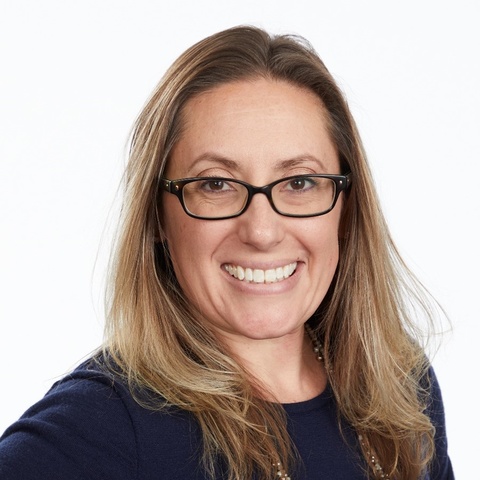
From the COVID-19 pandemic to debates over vaccines and the Make America Healthy Again movement, politics and medicine are intertwined in ways not seen in previous generations. When politics enters the doctor's office, what does it mean for the health of our democracy? Julianna Pacheco is working to answer that questions and joins Democracy Works host Chris Beem for a conversation about medicine and politics. They also discuss deaths of despair and how feeling hopeless can lead to political disengagement.
Pacheco is professor and department chair of political science at the University of Iowa. She received a Ph.D. in political science from Penn State and postdoctoral training as a Robert Wood Johnson Foundation Health and Society Scholar at the University of Michigan. She is currently a Carnegie Fellow and part of the Robert Wood Johnson Foundation’s Interdisciplinary Research Leaders Program. Her research sits at the nexus of political science and population health. She is currently working on a book looking at the role of physicians on the polarization of health.
This article is sourced from the Democracy Works podcast. Listen or subscribe below.
Where to subscribe: Apple Podcast | Spotify | RSS
Scroll below for transcripts of this episode.
Jenna Spinelle
From the McCourtney Institute for Democracy at Penn State. Welcome to Democracy Works. I'm Jenna Spinelle. Today on the show, my colleague Chris Beem is talking with Juliana Pacheco, who is professor of political science and department head at the University of Iowa. Julie studies the relationship between health and health care and politics. And Julie visited us on campus earlier this month, but the idea for this episode goes back almost to the beginning of democracy works one of the first ideas that Chris had for an episode way back when was something on deaths of despair that was kind of a new term at the time. I think the big book on deaths of despair had just come out maybe a year or two prior to that, and he wanted to look at the way that deaths of despair correlated with democratic participation. Couldn't quite figure out the right way into it at the time. But luckily, that's one of the things that Julie's work focuses on so they talk about that. They also talk about how physicians and healthcare professionals are dealing with increasing political polarization as it enters the doctor's office and the exam room, whether that's vaccine conversations, or the Make America healthy again movement, those kinds of things. Julie's current research project is looking at how doctors are dealing with those things as they encounter patients who might hold different views than they do, and this sort of widening divide more broadly. So this is a really great conversation. Thank you to Julie for making the trip in from Iowa to Penn State. Thank you to Chris for doing this interview, and I hope you enjoy.
Chris Beem
Julianna Pacheco, welcome to Democracy Works.
Julianna Pacheco
Thank you, Chris. Happy to be here.
Chris Beem
Well, it's actually kind of a return for you, right? You spent a lot of time here in in dear old Happy Valley. What's it like to be back?
Julianna Pacheco
Yeah, very happy. I am so delighted to be back. Yeah, it's been 26 years, wow, since I started as an undergrad and then I stayed on as a graduate student. So 10 years of my life spent in Happy Valley, and I am, I'm so happy to be back.
Chris Beem
Well, sometimes people say, you know, you come here and you you can't leave. So it's not just Penn State. It's state Penn. But that's not the case here. So you are now a a you're the department chair and Political Science at the University of Iowa, yep, that's correct, yeah. So in addition to this, you know, extremely well prepared, being an extremely well prepared political scientist, as of course, all PhD students from Penn State are, you are an expert in health policy, right? So I'm curious if you could just talk a little bit about how that happened. What is it about that field that kind of sparked your interest?
Julianna Pacheco
Yeah, that's a great question, because when I was here at Penn State Health wasn't so much on the top of mind. But after I graduated, I was lucky enough, fortunate enough to get a two year postdoc with the Robert Wood Johnson Foundation as a Health and Society scholar. So I spent two years at the University of Michigan. I still do not cheer on Michigan though at all, so I'll just say that, obviously, yeah, obviously, no. But during that time, I really, I like to say I drank the Kool Aid, and I learned a lot about health, public health, social determinants of health, and the whole point of the program was to bring in people from other fields, train them on population health, so that they can go back to their home disciplines and take a more interdisciplinary look at public health and health disparities. And for me, that really worked. And when you study health, there's so many things to think about. There's so many things that go into it, and it's just very exciting and and new things to learn and then to bring it, bring political science to it was really my contribution, right as well, right? Because not people were studying health policy, but I sort of brought in health to think about it at the individual level, as a resource that people need in order to participate in politics, and so that that was my contribution back then, and then, since then, it's just been part of everything that I do.
Chris Beem
That's a good segue. Why don't we start with your work on deaths of despair? Yeah. Can you talk a little bit about what that means?
Julianna Pacheco
So I have one piece on deaths of despair, where we're kind of looking at, you know, there's been this sort of epidemic of outcomes like opioid overdose suicides, gun violence, and it's all happening sort of among the white pot. Population who are poor and it and rural and rural, yes, and it comes from this word despair. People are desperate and and high levels of depression as well. And you know what? The piece that I had looks at communities in which there are high levels of deaths of despair, are they voting in different ways than communities who don't have these sorts of problems? And also, are they voting a particular way? And so this gets at this idea that voting is not just sort of an individual level thing, but also related to social networking and community community power. And so if you have pockets of communities that they are, they are dealing with a lot of health issues, especially ones that like this, that can be very devastating if you lose a family member or something to an overdose, you know that is that matters for aggregate patterns of voting that we see so in areas where there's high levels of deaths of despair, lower levels of turnout than in other areas that are sort of stronger and not dealing with these sorts of things, even keeping every other everything else sort of constant, right?
Chris Beem
Yeah, well, so I mean, there's, there's lots of people who don't vote, right? And they make this kind of, I mean, there's kind of a limited dimension of despair. Oh, it's not going to make any difference. They are. They're all crooks, whatever, right? But this is different, right? This is literally, like, I don't have the means, or don't have any reason to hope for my life turning around. And so this isn't just about, you know, you know, I don't want to vote. It's more about I don't want to get out of bed, right?
Julianna Pacheco
Oh, yeah, a lot of apathy, yeah. And yeah, not being able to advocate for themselves as well. And so with public health, we think a lot about again, these community or local areas, and we think about it at the aggregate level. And so when you have pockets of people who are feeling that way, they are not going to go out there and engage so that they can better advocate for their health as well, and so you can think about it, yes, you're one vote, probably not going to make a difference. But with others, if you don't have those strong social networks and as a community, you're not, you're not strong in that way. As a whole, you cannot advocate to change things, right?
Chris Beem
Yeah, it's interesting to me, because I think there's another question of degree here, in terms of, you know, we're talking about, you know, feeling despair, but not too much despair, right? And it strikes me that, you know, populism is driven by this sense of unfairness that people like me are getting screwed by the elite and populist leaders push they connect to that feeling of anger and resentment, and they use that to organize and to and often it's very successful, right? You can hear some of this in what Trump says, right? And so I'm wondering if, if you know, you should feel a certain sense of unfairness, but if it gets down too much to where you're feeling despair, that's too much. I mean, do you get a sense of that? Does that make sense to you?
Julianna Pacheco
Yeah, yeah. I think what you're talking about is that when people are desperate and angry and they these feelings are all real, right? And then it's like, what do you do with them? But elites can see that as an opportunity to either bring us together have rhetoric that brings us together and with a shared commonality, or they can use those feelings to help create wedges. And in this moment, it feels as though many politicians are seeing it as the latter. And when you start doing that, and then it works, because it's human nature. It's just ingrained in us to have these in group out group dynamics, and it's easy to point the finger away and things like that.
Chris Beem
So I think this is a good point to transition to some of your, you know, your ongoing, some other parts of your ongoing work. I mean this, this kind of us versus them politics, right? The regular politician serves the elite and is corrupt, and the regular guy and gal gets screwed Big Pharma, big insurance and. So there's this split in society, red, blue, we all know about that, and also this distrust in authority, right? That you, that you come to see, you know that there's a narrative that's being presented by the elites that's simply not true, or it's certainly not serving you, right and and so what you're doing right is looking at how this state of affairs, broader social state of affairs, is bleeding into medicine. Yes, right, yes. And so findings are recent. I'm not going to you know, it's not you know, it's in progress. But can you give us kind of the 50-cent tour of that.
Julianna Pacheco
And I can Yes, and I also want to say that this research is funded by the Carnegie Corporation, and so I'm a Carnegie fellow, and so I want to give a shout out to them for helping support me. Yes. Thank you very much. Yeah, so this idea of in group, out group mentality, and then how it's related to partisanship, so that we see individuals from the opposing party differently than we see individuals from our own party, and how like you were talking about that bleeds into thinking about authority and elites and different institutions. And I'm interested in how this is playing out in medicine and clinical encounters between patient and doctor. And what I would say is that number one politics is showing up in that clinical encounter, probably mostly from the patient side. But I would also think, and I think some of the evidence shows and practices show that I think physicians are also inadvertently sometimes bringing in politics into that space, and that when that happens, that covenant of trust that we need to be really strong so that people can have the right care get the right care is under strain.
Chris Beem
You call it sacred space, or, I mean, I'm assuming that's not your term, but, but in medicine, this, this clinical interaction between physician and patient, is a sacred space. Can you talk about what that means? It's a sacred space?
Julianna Pacheco
Yes, it's built on covenant of trust. And so, you know, it goes back to, and I should preface this by saying, I'm not a medical ethicist, right, right? This is a little out of my lane. But at the same time, it goes back to this, this more moral stance of do no harm. In order for that space to remain focused on health, certain things have to exist. The physician has to be seen as an expert in authority and what they're talking about. The patient has to feel safe enough to be vulnerable and talk about some of the ailments that they're, yes, weird stuff. Yeah, I have to be. And then when they do talk about they have to be honest about it. They can't just they have to be honest in their assessment. And then when the doctor hears that, they have to believe that the patient is being honest. And then the communication between the dyad has to be, as I said, honest and clear. So if anybody is holding out, be holding something back. It's it's not going to be as best as it can and then more recently, so there's different models of how this relationship should go down, but more recently, the overall thought is that this should be a partnership, that it's this care based partnership, where The Doctor really is tasked with listening to the patient, having empathy for the patient, if the patient says that they do not want a even though a physician thinks that this treatment is best, they need to listen to that and figure out what's best for the patient. And so there's a lot of again, burden on this relationship being very safe and sacred, and so that they can have that partnership. And the patient has to feel like the physician is advocating for them and not thinking about money, or, I don't know something else. And so that's what I mean by this sacred covenant of trust space. And any sort of thing to break that down calls into question, then sort of this medical medicine, clinical encounter.
Julianna Pacheco
Yes, I think that puts physicians in a very difficult spot. That said, I think there's probably more variation among physicians and what they think is the best treatment options. I think on some things, there's probably agreement, yeah. But you know, science itself is not foolproof, right? Even vaccines, right? Like it's, it's, they're not 100% right, and safe and so and people can't, yeah, and so that. But the thing is, is the physician has the burden on talking about that uncertainty in a way that can still advance public health, right? And that's hard. And so, yeah, one person wearing a mask or not wearing a mask, okay, but a community wearing masks during a pandemic is going to save lives, you know, right? So that scale and talking about it as herd mentality is just, I think, very hard for a doctor to communicate to the patient and maybe even for some doctors to understand, because I would think that they have really good training on, I would hope, very good training in the weeds biological mechanisms right to the extent that they get training on social determinants of health and also public health, sort of aggregate level dynamics, I don't know. I think some some programs, yes, programs, certainly, maybe some programs less than that, different cohorts. I think maybe there's probably age differences here. And I do know that from the research that physicians are very wedded to things that they were taught in med school, right? And so you have these med school biases as well. Well, I know that's that's for me. I only believe the things that I learned in Penn State.
Chris Beem
Yeah, I mean, so I think anybody who is paying even the least amount of attention, would you know, agree that there's been this kind of partisanization of American life generally. And this is just sounds like one more very depressing example, right? Yes. Well, you've, you've written about covid and the way that that kind of manifested partisanship, with regards to, you know, masks, especially. And, you know, I've heard people say, I don't believe in masks, right? And I think that puts a physician in a very difficult position, because I doubt there are many physicians who would agree with that statement, right? I mean, they their training and their career is grounded in science. They may not be scientists, but they certainly have been trained to take science seriously and to respect what science tells them. And so imagine it's it's difficult, especially when you are you know it doesn't. You know when you're hearing things about vaccines, when you know, when you're worried that people are going to take your guns, you know, or, or, you know, Oh, you guys change your mind everything every minute about what's healthy and what's not and, and so, you know, it's got to be challenging for a physician to, you know, tell the truth as they see it, and yet respect the autonomy of an individual who is saying things that they know are not true.
Chris Beem
And the software that I have and I use, it's just fine. Thank you very much, right, right. So when I when I first read your paper, I was thinking about what it's like for a physician. And then it kind of occurred to me that in some ways, this is this kind of dynamic is present in just about every interaction we have with an expert, right? Or anybody who's giving us a service, right? I you know, if I'm getting my hair cut, I don't talk about politics. If I go into the get the car fixed, I don't talk about politics just because it's like, you know, ethical standards aside, it's just not a good strategy for, you know, creating a productive relationship and getting out of there without with your with your cheese centered, right? Yes. So I wonder if, if some of that is just impacting physicians. So they just say, here I am. And what, you know, Western Pennsylvania, where everybody owns at least three guns, you know, I'm probably not going to get very far. I want to be able to pursue some other issues that are that I might be able to get some traction on, so I might just let this go.
Julianna Pacheco
Oh, for sure. I think they have to pick their battles. Yeah, and and again. I mean, if, if I come into an interaction and the person, I feel like the person is trying to preach to me or something, then I'm not listening anymore, right? And so training with communication and your battles. I mean, it's really, I think physicians, they do get that get this training, but even more training on how to have difficult conversations and how to pivot and push and not push, and things like that.
Chris Beem
The the other dynamic here that you know, we can't ignore. Are, is that for you know, irrespective of what kind of training they have, irrespective of how good they are at it, physicians are pushed more and more that they don't have any time for these conversations, right? Oh, yeah, the corporate constraint on how long a these interactions this sacred space? Yeah, you got sacred space, but you got to get out. You turn them out in 10 minutes, right? And, and, you know, that's got to be going into their thinking as well, right?
Julianna Pacheco
Absolutely, absolutely. So that's when you think about, what about the nurses? What about the PAs? What about the receptionist in the lobby. You know, other other actors, pharmacists, other actors in that medicine, medical train chain, something like that and and so you don't need like that covenant of trust with the receptionist or whatever. But if the receptionist is says some something weird, you know, it may spill over to affect how you think about the interaction with the nurse or the doctor.
Chris Beem
Or more positively, the receptionist. Might hear something that is that the doctor needs, the physician needs to know, to know. Yeah, sure, yeah. So I, I have a friend who, actually, I think he's retired now, but he ran an emergency department in Milwaukee, and he was, he's very pro gun broke, sorry, pro gun control. And big difference there and and he says that he sees it as part of his task as an emergency room physician, because he says, once the bullet is fired, it's too late to intervene. So the only way to intervene medically that's smartest, not to mention most efficient, cheapest. You know, best outcomes is to do is to intervene before. And you know, I imagine there's, I mean, there's a lot of gun owners in Wisconsin too, and I don't you know, again, it's a matter of kind of every physician understands the realities of social drivers of health. They all understand the problems associated with public health. They all understand the problems of diseases of despair, and understand that if they were to revive the economy, say in Youngstown, Ohio, diseases of despair, deaths of despair would almost certainly go down, right? Yeah. And so it's, it's not, it's almost in terms of the Hippocratic Oath, it's just not good medicine to ignore those dimensions of the problem. And yet, that's one part. And then when they're coming into these, you know, this sacred space, they have to just say, Okay, well, okay, that's something you might want to think about. And that's as far as it goes right as far as it goes.
Julianna Pacheco
Because yeah, and I think you're bringing up a really good point. And I think that the AMA, the American Medical Association, sort of has attention when it comes to this. Because on the one hand, these are, they have this Hippocratic Oath, right, do no harm and and so from that, you have a responsibility ethically to advance public health, and that may mean voting a certain way, writing campaign contributions, all that sort of stuff, going out and talking to media, whatever, being an advocate for public health. At the same time, they have these guidelines that when you're in that clinical encounter, in that space, you are not supposed to talk about politics, right at all, right? And if it comes up, you're supposed to, you know, have the the space to think about how I should engage with this, whether or not I should engage with this, and maybe, as you said, it's not relevant, so I'm just gonna sidestep it, or whatever, which, and maybe I'm just gonna do that anyways, because it's gonna make everyone uncomfortable if I don't, because I don't have time, and I and I'm, yes, I'm under the clock, and I need to, I need to go. And so it's a real tension that I think the fun thing is, with this research is that more and more and more people are starting to think about the political determinants of health in the academic field, and also with diff, with the AMA and other nonprofits and things that are out there organizations, they're starting to think a step back and look at how democracy as a whole is related to health. And I think the more and more we see that and we talk about that, we're going to get more clarity on this tension, because it is a tension right now. So as as a private citizen, you can advocate. And again, I think the expectation is you do advocate, right? But when you're at work talking to an individual where you could have a very big impact, you're kind of supposed to sidestep, or, you know, and take it slow.
Chris Beem
Yeah, you know, your your research kind of focused on this, this photograph of a of a physician with a, you know, a rainbow sticker on. And you know, there's another trade off, because you know, if you don't, if you have that on, then you know the gay, lesbian, trans people who you are serving are going to feel more safe, more confident, more able to disclose some information. But you know, you also might alienate some people who are either, you know, strongly religious conservatives or whatever. And you know, I don't know, what the heck, what? How do you? How do you toe that right line?
Julianna Pacheco
Thanks for bringing up that. That was a really cool experiment that I did with adults, an adult survey. I had a hypothetical picture of this doctor, and I told the participants, imagine that you were seeing this doctor for the first time, and then I asked a series of questions about judgments towards this doctor, related to communication, expertise, different types of behaviors. And as you were saying, one of the treatments that I gave was I put that pride sticker on the lapel of that picture to see if people would, if that would matter in their and their favorability. And it ends up that Democrats who got that treatment rated that doctor higher than Republicans who got that treatment. So to your point, yes, it that seems to be a symbol, although meant to be create a safe space. Was is polarizing. I think what's gonna happen, and I don't know if this is good or bad, you can I don't know exactly, but I think because of where we live, is associated with partisanship, I think more and more we're going to see, you know, red areas and blue areas. And then I think we're going to see physicians who are red and physicians who are blue. And then people who are red decide to go to the red physicians, and people who are blue decide to go to the blue physicians. And I do have some survey data to suggest that it's all hypothetical of surveys, right, but that if Democrats found out that their personal doctor was Republican, 30% of them would consider switching doctors, right? And so I think we're just going to see even more what I would call medical polarization, which could be good if everyone was providing the same care, but that's not happening either. And so I think we're going to see more and more health disparities by partisanship.
Chris Beem
And well, we certainly saw that with COVID.
Julianna Pacheco
And with COVID, that is exactly what we saw that in areas that were more leaning towards a Republican candidate for presidential election at that time, I think it was Trump over Biden. So in areas where Trump won, we saw infection rates of covid was much higher than in the areas that went for Biden, and then mortality, and then what's also interesting in those areas after he announced invective mycin, is that? How you say it? I think whatever you know, I'm talking about the horse, the horse to warmer. After Trump talked about horse to warmer as being a potential treatment of covid in the areas that were red, prescriptions went up for those things. Now that's very interesting, because that's suggesting that the physicians are handing out prescriptions for it, even though there wasn't scientific evidence to suggest that that would help anything. And then the pharmacists are handing it over to that's very interesting.
Chris Beem
Certainly the path of least resistance. And, yeah, the other thing is that we have to recognize about these physicians is they live in these communities, you know, physicians who it's just going to be more difficult for them to, you know, deal with the blowback from these people who, you know, don't like their choice or don't exactly the way they're responding to all this. So yes,
Julianna Pacheco
Absolutely, and and one way to solve that is to go to a place we're not going to have right exactly, but again, then we're going to see differences in these health outcomes, bipartisanship. And this is where some of my work to the public health folks, saying, hey, you need to start thinking about partisanship. Put it on your surveys right. Think about the implications of it for health.
Chris Beem
And what do we do about it, as we do about it if we care about health outcomes?
Julianna Pacheco
Yep, yeah, and I think they're listening, yeah.
Chris Beem
I mean, I we've talked a lot about just how difficult it is to be a physician right now, and you know, there's just no two ways about that. But one thing that I kind of took from your research. Church. And you know, it's, it's not overwhelmingly So, but, but I get the sense that they're despite all these difficulties, there's still signs that physicians take this sacred space very seriously, and they are striving to keep politics out, and they're striving to maintain a an interaction where the the end result is the best outcome for the patient, while respecting their autonomy and their, you know, and their own decision making.
Julianna Pacheco
Yes, I think that's that's true. I mean, I think physicians don't go into that profession without that. They want to help people, right? And this is the way that they can help the most people. And so I believe that physicians, on the whole, regardless of where you're at in the political spectrum, want to maintain professionalism, and really, at the end of the day, just want to provide the best care for their patients and not do no harm.
Chris Beem
Well, I think that might just be a good lesson for all of us, right? Because we all have jobs and we all interact with people, and it would not it would behoove us all to think about the sacred space that we're trying to create, right and and how we are best serving the people that we're working with whatever we do? Right? Absolutely. Yes, yes. Well, Julie, thanks so much for your time. We really appreciate having you.
Julianna Pacheco
Thank you, Chris, happy to be here.
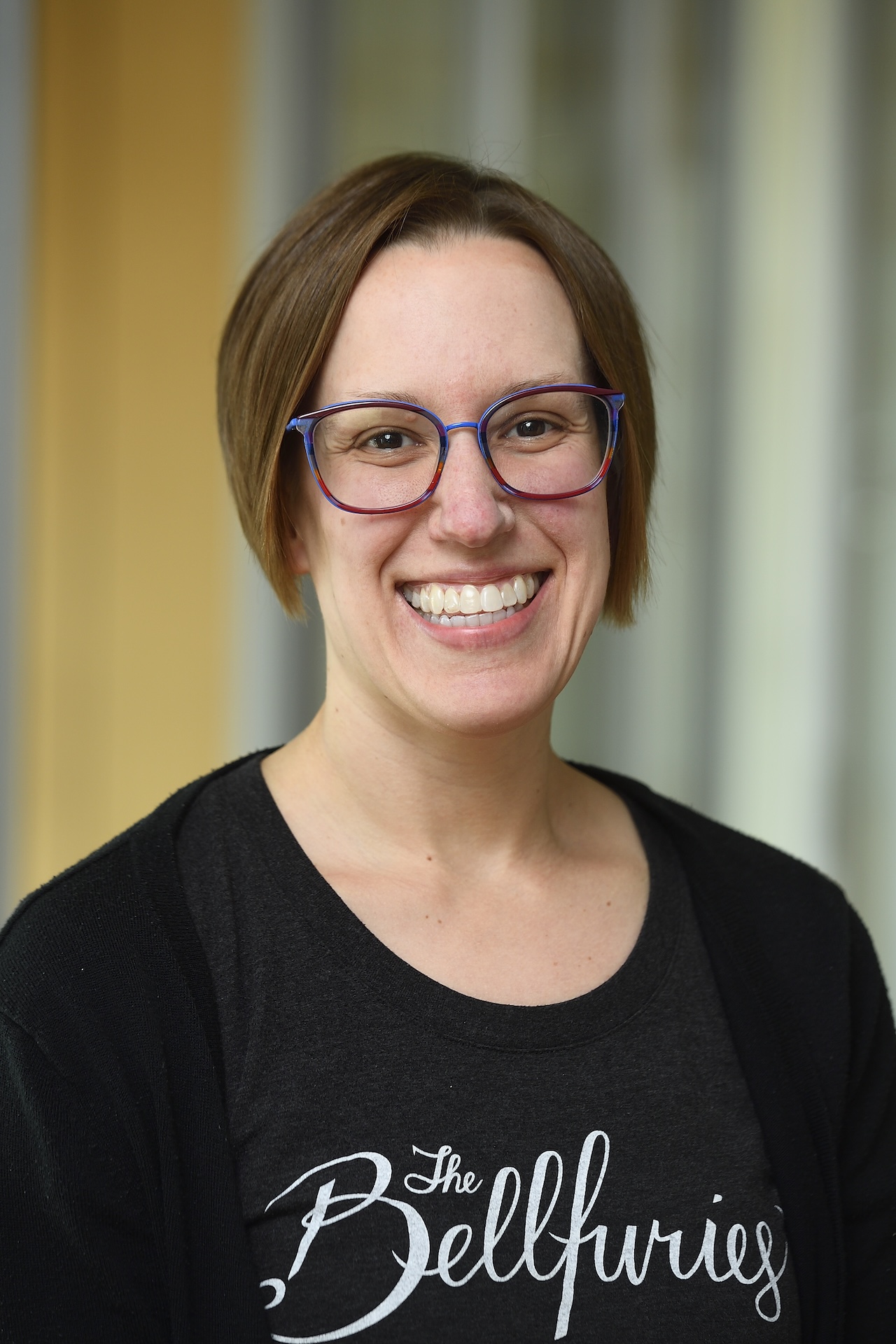
Jenna Spinelle is a writer and podcaster who tells stories that inspire hope and change in trying times. She hosts the podcasts Democracy Works When the People Decide, both productions of the McCourtney Institute for Democracy at Penn State. She is currently writing a book about the democracy reform movement and how more people can get involved in the work to strengthen American democracy. Spinelle teaches courses on news writing, podcasting, and content creators at Penn State’s Donald P. Bellisario College of Communications. Her writing has appeared in outlets including Time magazine, Inside Higher Ed and Current, a trade publication covering public media.


We are part of The Democracy Group, a network of podcasts that examines what’s broken in our democracy and how we can work together to fix it.